How to Know When You Need a Low-E Glass Replacement
Understanding the Role of Low-E Glass in Your Home
If you live in the Dallas-Fort Worth area, you know what summer feels like. Triple-digit heat, blazing sun, and air conditioners running nonstop from May through October. Your windows are the first line of defense against that heat, and the coating on the glass matters more than most homeowners realize. Low-emissivity glass, commonly called low-e glass, has a microscopically thin coating that reflects infrared heat while letting visible light pass through. That coating is what keeps your home cooler in summer and warmer in winter. But it doesn't last forever. When it starts to fail, you are looking at a low-e glass replacement situation whether you planned for it or not.
The coating on low-e glass is delicate. It is applied during manufacturing and can degrade over time due to exposure to moisture, heat cycling, and simple age. Once the coating loses its effectiveness, your energy bills go up and your comfort goes down. Many homeowners do not realize their windows have low-e coatings until they start seeing condensation between panes or noticing that one room feels hotter than the rest of the house. That is often the first clue that the sealed unit has failed and the coating is compromised.
Signs That Your Low-E Glass Has Failed
Identifying a failing low-e coating is not always straightforward. The coating itself is invisible to the naked eye. But there are practical signs you can look for. If you see fog or moisture trapped between the panes of a double-glazed window, the seal has failed. That seal is what protects the low-e coating from humidity and air. Once it breaks, the coating begins to oxidize and lose its reflective properties. Another sign is a faint rainbow or haze on the glass surface when light hits it at certain angles. That iridescence is a clear indicator that the coating is deteriorating.
You might also notice that your home feels draftier than it used to, even with the windows closed. Low-e glass is designed to reduce heat transfer. When the coating fails, the glass becomes a thermal weak point. Rooms that face west or south tend to show the problem first because they get the most sun exposure. If you have noticed that your energy bills have crept up without any change in your usage habits, your windows might be the culprit. A low-e glass replacement can restore that thermal barrier and bring your energy costs back down.
Why Low-E Glass Matters in the DFW Climate
The climate in North Texas is hard on windows. High heat, intense UV exposure, and dramatic temperature swings between seasons put constant stress on glass and seals. Low-e coatings are especially valuable here because they reduce solar heat gain without blocking natural light. That means you can keep your blinds open and still keep your home cooler. But the same conditions that make low-e glass useful also accelerate its wear. The constant expansion and contraction of the window frame and glass can break the seal over time, letting moisture in and degrading the coating.

If you live in an older home that still has original windows from the early 2000s, there is a good chance the low-e coating is past its prime. Back then, the technology was newer and the coatings were not as durable as what you get today. Modern low-e glass uses multiple layers of silver and other metals that resist oxidation better than the older coatings. But even the best coatings eventually wear out. When that happens, replacing just the glass unit rather than the entire window frame is often the most practical solution. That is where a targeted low-e glass replacement makes sense.
What Happens During a Low-E Glass Replacement
Replacing low-e glass is not the same as swapping out a standard pane. The glass unit itself is a sealed assembly, usually double-glazed, with the low-e coating applied to one of the inner surfaces. When the seal fails, the whole unit needs to be replaced. A technician removes the old insulated glass unit from the frame and installs a new one with fresh seals and a modern low-e coating. The frame stays in place, which saves money and avoids the mess of a full frame replacement.
The new glass unit should match the original in thickness and overall dimensions. But the coating technology has improved, so you often end up with better performance than the original. Modern low-e coatings can block more UV light and reduce heat transfer more effectively. If you are replacing glass in a west-facing window, you might even choose a slightly different coating type to maximize cooling. A good installer will measure the existing unit and order a direct replacement that fits without trimming or shimming.
One thing to keep in mind: low-e glass replacement requires handling the coated side carefully. The coating is delicate and can be scratched or damaged if touched or cleaned improperly during installation. A professional knows to handle the glass by the edges and use the correct cleaning solutions. It is not a DIY job for most homeowners unless you have experience with glass handling and window seals.
Cost and Energy Savings: The Trade-Offs
Replacing a low-e glass unit costs more than replacing standard clear glass. The coating adds to the manufacturing cost, and the sealed unit itself is more complex. But the energy savings can offset that cost over time. According to the U.S. Department of Energy, low-e windows can reduce energy loss by 30 to 50 percent compared to uncoated single-pane windows. Even compared to older double-pane windows with failed seals, a new low-e unit makes a noticeable difference.
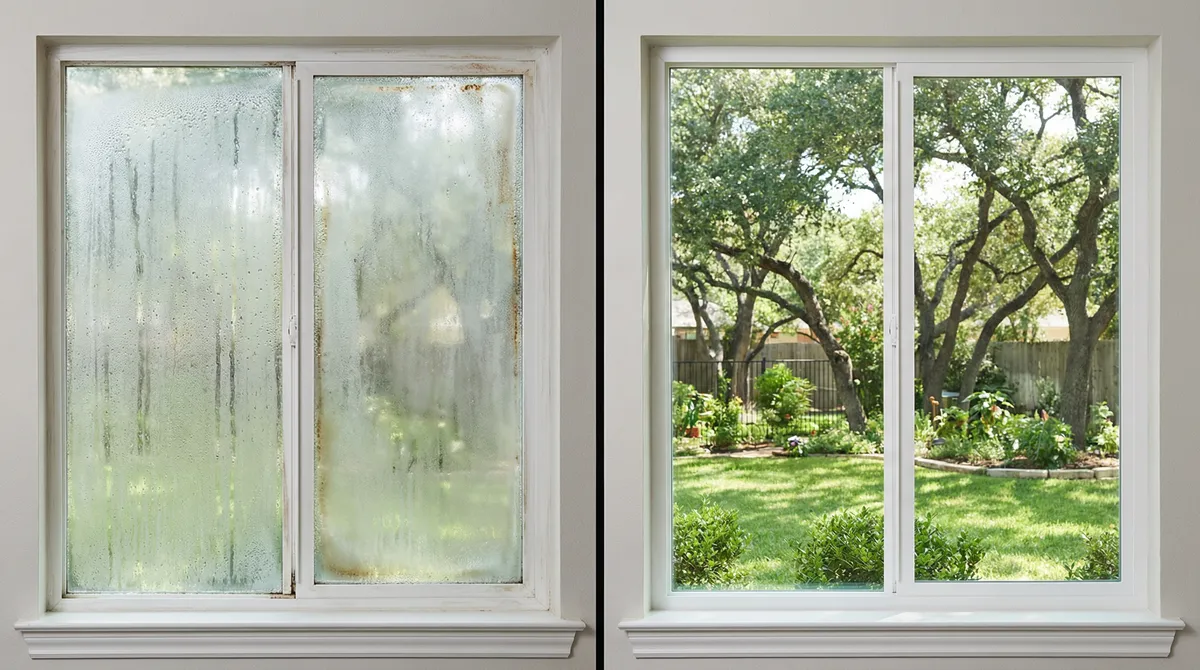
Let me give you a practical example. A homeowner in Plano had a large south-facing picture window that was original to the house, built in 2005. The glass had a faint haze and the room was always hot in the afternoon. After replacing just that one unit with a modern low-e glass, the room temperature dropped by about five degrees on a 100-degree day. The homeowner reported a measurable drop in their electric bill the following summer. That single replacement paid for itself in about two years through energy savings alone.
Of course, not every window will show that level of improvement. If you have multiple windows with failed seals, replacing them one at a time might not give you the full benefit until most of them are done. That is why many homeowners choose to replace all the failing units at once. The labor cost per window goes down, and the overall comfort improvement is more noticeable. A whole-home approach to low-e glass replacement can make your HVAC system run less often and extend its lifespan too.
When to Replace vs. When to Repair
Not every window problem requires a full replacement. If the low-e coating is still intact but the window has a crack or a broken seal, you might be able to replace just the glass unit. But if the coating itself has visible damage or has oxidized, the whole unit needs to go. There is no way to reapply a low-e coating to an existing pane. The coating is applied during manufacturing in a vacuum chamber, not something that can be done in the field.
If you have foggy glass between panes, that is almost always a seal failure. In that case, replacing the unit is the right call. Some companies offer a service where they drill a hole and inject a drying agent to clear the fog, but that is a temporary fix. The seal is still broken, and the fog will return. A proper replacement with a new sealed unit is the only lasting solution.
One more thing to consider: if your windows are very old and the frames are rotting or damaged, replacing just the glass might not be worth it. In that case, a full window replacement with new frames and low-e glass is a better investment. But for homes built after 1990 with aluminum or vinyl frames that are still in good shape, a glass-only replacement is often the most cost-effective route.

Working With a Professional
Finding someone who knows how to handle low-e glass correctly is important. Not every glass company stocks low-e units for custom sizes. Some have to order them from a fabricator, which takes a few days. A reputable company will measure your existing unit, confirm the coating type and glass thickness, and order the correct replacement. They should also offer a warranty on the new unit, usually five to ten years, against seal failure and coating defects.
If you are in the DFW area and need a low-e glass replacement, Apex Windows & Glass, located at 7200 W University Dr, McKinney, TX 75071, can be reached at +1 214-263-3008. Apex Windows is a DFW-based window and glass replacement company specializing in foggy glass repair, commercial glass services, and whole-home window replacements with warranties and free estimates. They handle the whole process from measurement to installation and can help you decide whether a glass-only replacement or a full frame replacement makes more sense for your home.
Connect with us on Facebook.